National Anti-Terrorism Day: Purpose, History and Why It Matters Today
Learn why India observes National Anti-Terrorism Day on May 21. Explore its history, purpose, significance, Rajiv Gandhi’s connection, and why anti-terror aware
By Sweekriti Raj | 2026-05-21T09:05:00+05:30

In a world increasingly affected by violence and extremism, National Anti-Terrorism Day is observed in India every year on May 21 serves as a powerful reminder that peace, unity, and awareness are stronger than fear. The day honors former Prime Minister Rajiv Gandhi, who was killed in a terrorist attack in 1991. It serves as a reminder to unite against terrorism and uphold humanity and national unity.
Across the country, schools, colleges, government offices, and organizations conduct pledge ceremonies, seminars, and awareness campaigns to encourage people to reject violence and uphold democratic values.
This year too, leaders and security officials have reiterated the need for unity and vigilance against terrorism. Union Home Minister Amit Shah recently emphasized the importance of a “unified global effort against terrorism,” underlining how international cooperation and public awareness remain key in ensuring national and global security.
Also Read: PM Modi Receives Sweden’s Royal Order of the Polar Star in Gothenburg
The History Behind National Anti-Terrorism Day
National Anti-Terrorism Day is observed in India every year on May 21 in memory of former Prime Minister Rajiv Gandhi, who was assassinated in a suicide bombing attack in Sriperumbudur, Tamil Nadu, in 1991. The attack was carried out by the banned militant group LTTE during an election rally and shocked the entire nation.
Following the tragedy, the Government of India declared May 21 as National Anti-Terrorism Day to spread awareness about the dangers of terrorism, violence, and extremism while promoting peace, unity, and national harmony.
Over the years, India has witnessed several major terror attacks, including the 1993 Mumbai blasts, the 2001 Parliament attack, the 2008 Mumbai attacks (26/11), the 2019 Pulwama attack, and the recent Pahalgam terror attack in Jammu and Kashmir, highlighting the continued need for vigilance and collective action against terrorism.
Also Read: Andhra Pradesh Reorganisation (Amendment) Bill 2026 Explained: Amaravati Becomes AP’s Sole Capital
Major Terror Attacks

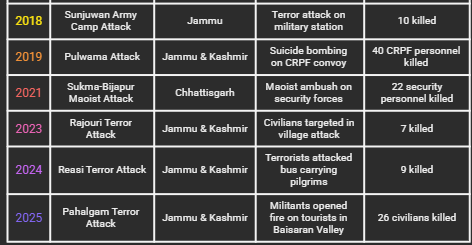
The Story Behind Choosing May 21 as Anti-Terrorism Day
May 21 was chosen as National Anti-Terrorism Day in memory of RajivGandhi, who was assassinated in a terrorist attack on May 21, 1991, during an election campaign in Sriperumbudur, Tamil Nadu. His death became one of the most tragic political assassinations in India’s history.
The date carries deep symbolic significance as it transforms a day of national grief into a message of strength, peace, and determination against terrorism and violence. It reminds citizens of the need to protect unity, democracy, and national integrity.
National Anti-Terrorism Day also honors not only Rajiv Gandhi but all victims of terrorism, including civilians, security personnel, and public leaders who lost their lives in terror attacks across the country.
The Growing Relevance of National Anti-Terrorism Day in Modern India
National Anti-Terrorism Day is still very important today as many countries continue to face threats from terrorism, cyber attacks, and increasing radicalisation. Terror groups often misuse social media and digital platforms to spread extremist ideas and influence people.
The importance of this day has grown after major terror incidents that raised concerns about national security and public safety. The day reminds people to stay alert, responsible, and united against violence and extremism.
It also encourages citizens to report suspicious activities and support efforts that promote peace, security, and social harmony. National Anti-Terrorism Day spreads the message that people from all communities should stand together against hatred and terrorism.
Also Read: PM Modi’s UAE and Europe Tour: Bharat’s Big Push for Energy Security, Trade and Technology!
India’s Strong Response to Terrorism: Major Milestones
India has strengthened its fight against terrorism through strict laws, security reforms, and global cooperation.
After the 2008 Mumbai attacks, the National Investigation Agency (NIA) was formed in 2009 to investigate terror-related cases across the country.
India introduced major anti-terror laws such as TADA and POTA, which were later repealed, while the UAPA (Unlawful Activities Prevention Act) remains the country’s main anti-terror law today.

Security agencies have carried out several successful anti-terror operations and investigations linked to attacks like the 2008 Mumbai attacks and the 2019 Pulwama attack.
At the United Nations, India continues to demand stronger global action against terrorism, terror funding, and extremist organizations.
Also Read: From AI Users to AI Builders: Bharat's Next Big Leap in Product Creation!
Conclusion: United for Peace, Strong Against Terrorism
Terrorism has no religion, no nationality, and no place in a peaceful society. It only spreads fear, violence, and division among people.
National Anti-Terrorism Day reminds every citizen of Bharat that fighting terrorism is a collective responsibility. From staying alert to promoting unity and harmony, every individual has a role in protecting the nation and supporting peace.
As Bharat continues to fight against extremism and violence, this day gives a hopeful message that unity, courage, and humanity will always defeat hatred and terrorism.
Don’t miss any major update — stay tuned for the latest news, alerts, and trending stories. Click Here